
100% Virtual · Nationwide
Prescription · Requires ConsultationPeptide therapy, prescribed by a physician.
Written by the Elevate Clinical Team
Medically reviewed by Dr. Eric W. Anderson, MD · Last reviewed
Citations independently verified against PubMed, ClinicalTrials.gov, and FDA sources on .
Peptide therapy is the prescribed use of short amino-acid chains that signal the body to repair tissue, release growth hormone in its natural pulse, regulate appetite or reduce inflammation. It is for adults roughly 30–65 — executives, athletes and active people — whose recovery, body composition, sleep or focus has slipped despite training and effort, and who want a compound chosen from their own bloodwork rather than a forum thread. Every protocol here is physician-led: Dr. Eric W. Anderson, MD selects the compound from your own 65-biomarker panel rather than from a catalog.
Every vial we prescribe passes six documented checkpoints.
The lot number on your vial links back to every document created along the way. See the full chain of custody →
Who this is for
Peptides are not a shortcut and they are not a menu. They are signaling molecules — short chains of amino acids that tell the body to repair tissue, release growth hormone in its natural pulse, regulate appetite or dampen inflammation. Used well, inside a protocol built on your own labs, they close the gap between how you are training and how you are recovering.
- Executives and operators whose sleep quality and afternoon focus have quietly degraded.
- Athletes and lifters carrying a nagging tendon, joint or soft-tissue injury that will not resolve.
- Adults 30–65 pursuing lean mass, body composition and metabolic change alongside hormone work.
- Anyone who has read about BPC-157, Sermorelin or GLP-1 compounds and wants a physician's read rather than a forum's.
The categories we actually work in
- Recovery and tissue repair — BPC-157 and TB-500 for tendon, ligament and gut-lining research applications.
- Growth hormone axis — Sermorelin, Ipamorelin and CJC-1295, which prompt your own pituitary pulse rather than replacing it.
- Metabolic support — physician-reviewed options considered alongside protein targets and resistance training.
- Sleep, cognition and longevity — compounds studied for sleep architecture, cellular energy and healthspan.
- Sexual health and vitality — targeted therapies reviewed alongside your hormone panel, not in isolation.
Full mechanism-by-mechanism detail lives in our peptide reference library.
Peptides work best on top of corrected hormones
A growth hormone secretagogue will not fix low testosterone. A repair peptide will not out-run poor thyroid function or chronic inflammation. This is why we run a full 65-biomarker panel before anyone is prescribed anything — free testosterone, SHBG, estradiol, thyroid, insulin, IGF-1 and inflammatory markers all determine whether a peptide protocol will do what you hope it will.
For most patients the sequence is hormones first, peptides layered second. See hormone therapy for that side of the work.
What the process looks like
- 01 — Apply and book. Start with a free intro call or labs with a full clinical-team review.
- 02 — Baseline labs. A 65-biomarker panel drawn at a Quest location near you.
- 03 — Physician video visit. Thirty minutes on every value, every symptom, your training and your goals.
- 04 — Your protocol. Physician-designed, shipped to your door, with dosing and coaching built in.
- 05 — Ongoing optimization. Repeat Quest labs and continual titration as your biology changes.
Read the individual pages
Each of these is a standalone reference page — what the compound or hormone is, what has been studied, and what a physician checks before prescribing it.
For where each peptide sits with the FDA right now, including the July 2026 advisory committee vote counts, see the FDA 503A peptide status tracker.
BPC-157
A synthetic pentadecapeptide studied in preclinical models of tendon, ligament and gut-lining repair.
Sermorelin
A growth-hormone-releasing hormone analog that prompts your own pituitary pulse rather than replacing it.
Ipamorelin
A selective growth-hormone secretagogue studied for recovery and sleep with minimal cortisol or prolactin effect.
CJC-1295
A long-acting GHRH analog usually discussed alongside ipamorelin to extend the growth-hormone pulse.
Tesamorelin
An FDA-approved GHRH analog with human trial data on visceral adipose tissue reduction.
MOTS-c
A mitochondrial-derived peptide studied for metabolic flexibility, insulin signaling and exercise capacity.
IGF-1
The downstream growth factor that growth-hormone therapy is actually titrated against, and the marker we track on labs.
NAD+ / NMN
Cellular energy substrates studied for mitochondrial function, DNA repair signaling and age-related NAD+ decline.
Testosterone
What free and total testosterone actually mean, what else has to be measured, and how therapy is dosed and monitored.
Estrogen
Estradiol in both men and women — why it is not a number to crush, and how perimenopausal therapy is designed.
Medications and sourcing
Prescribed therapies are dispensed through FDA-registered compounding pharmacies and licensed pharmacy partners when available. Research-use compounds, where offered, are a separate category — not FDA-approved, not prescribed as medical care, and not intended for human or animal consumption. We keep that line explicit rather than blurred, which is more than most of this industry does.
For a plain-language explanation of where we stand on peptide access, read our peptide access position paper.
Frequently asked questions.
- Are peptides legal to prescribe?
- It depends on the compound. Some peptides — tesamorelin and the GLP-1 regulators among them — are FDA-approved medications. Others are dispensed by licensed, FDA-registered 503A/503B compounding pharmacies after a physician evaluation. Anything that is neither is listed on this site as research-use-only and is never prescribed as medical care.
- Do I need labs before starting a peptide protocol?
- Yes. Every Elevate Chicago protocol starts with a 65-biomarker baseline drawn at Quest and a clinician review. Growth-hormone-axis peptides in particular require IGF-1, glucose and metabolic markers before and during therapy.
- How are peptides administered?
- Most are small-volume subcutaneous injections given with an insulin syringe, typically once daily or several times a week depending on the compound. Lyophilized (powder) vials are reconstituted with bacteriostatic water using a small-gauge syringe. Your dosing card spells out the exact volume for your prescription.
- What are the realistic side effects?
- The common ones are injection-site redness, transient water retention, appetite change and — with growth-hormone secretagogues — tingling in the hands or an increase in fasting glucose. Anything persistent is a reason to message the clinical team and adjust, not to push through.
- Can I combine peptide therapy with hormone therapy?
- Often, yes, and many Elevate Chicago protocols do exactly that. Because peptides and hormones act on overlapping axes, the combination is designed and dosed by one clinician who is looking at one complete lab panel rather than stacked independently.
Sources
- 1.Compounding and the FDA: questions and answers— U.S. Food & Drug Administration
- 2.Bulk drug substances nominated for use in compounding under section 503A— U.S. Food & Drug Administration
- 3.Published literature on therapeutic peptides— PubMed, U.S. National Library of Medicine
- 4.Test directory and patient service center locator— Quest Diagnostics
- 5.Telehealth policy and licensure requirements— U.S. Department of Health and Human Services
Related
The peptide reference library
Mechanism-by-mechanism one-pagers on every compound we are asked about.
Hormone therapy in Chicago
Physician-led testosterone, estradiol and thyroid work for Chicago patients, delivered entirely by video.
Weight loss in Chicago
GLP-1 therapy paired with protein and resistance training so the weight you lose is fat, not muscle.
About this page
Written by the Elevate Clinical Team
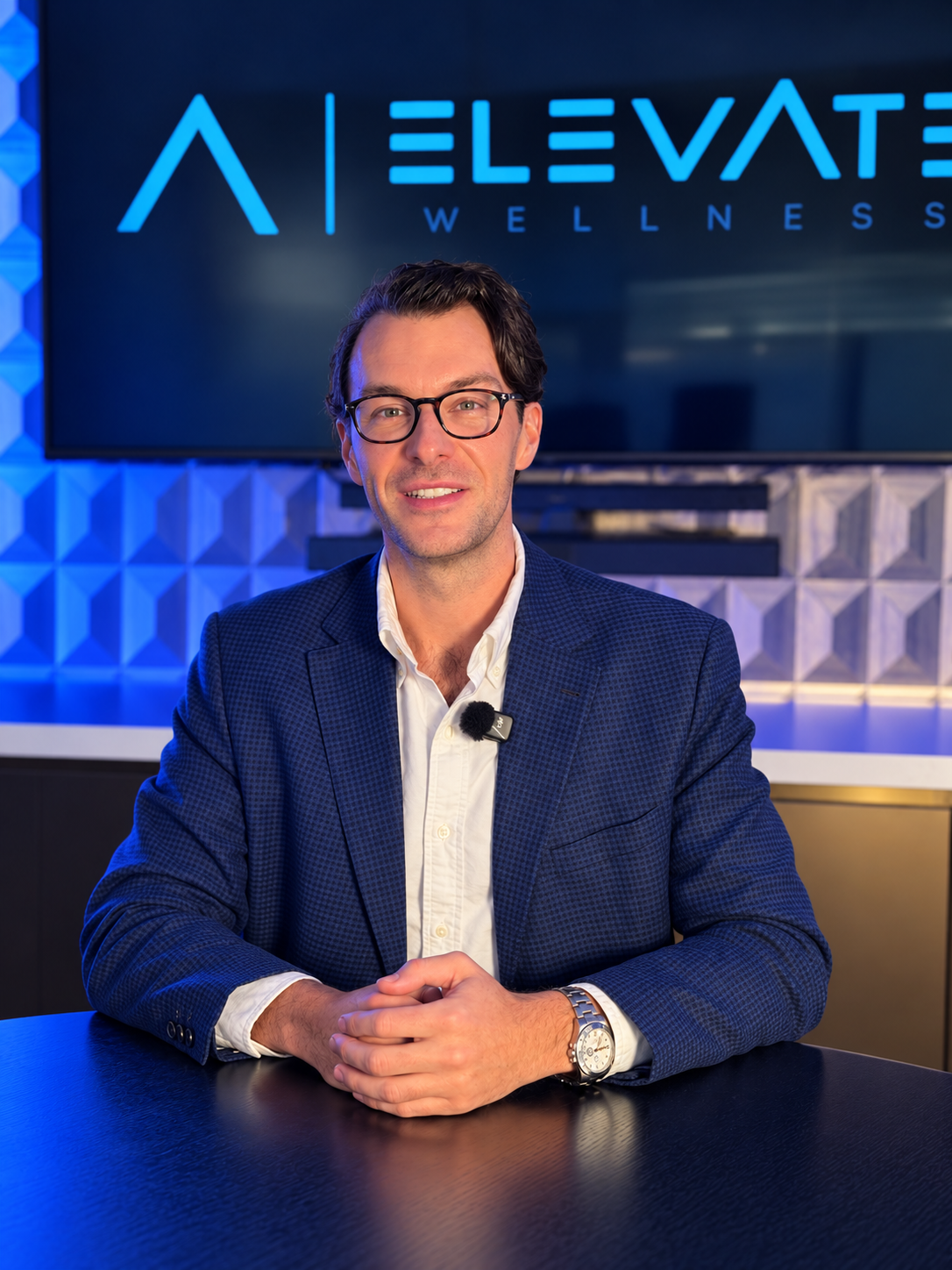
Medically reviewed by Dr. Eric W. Anderson, MD · Last reviewed . Citations independently verified against PubMed, ClinicalTrials.gov, and FDA sources on . Educational content only — not medical advice, not a diagnosis, and not an offer to sell any prescription product.
Next step
Find out what your numbers actually say.
65 biomarkers at Quest, then thirty minutes with your physician.